
Your AI Confidant and Human Connection: What Happens When AI Becomes the One You Talk To?
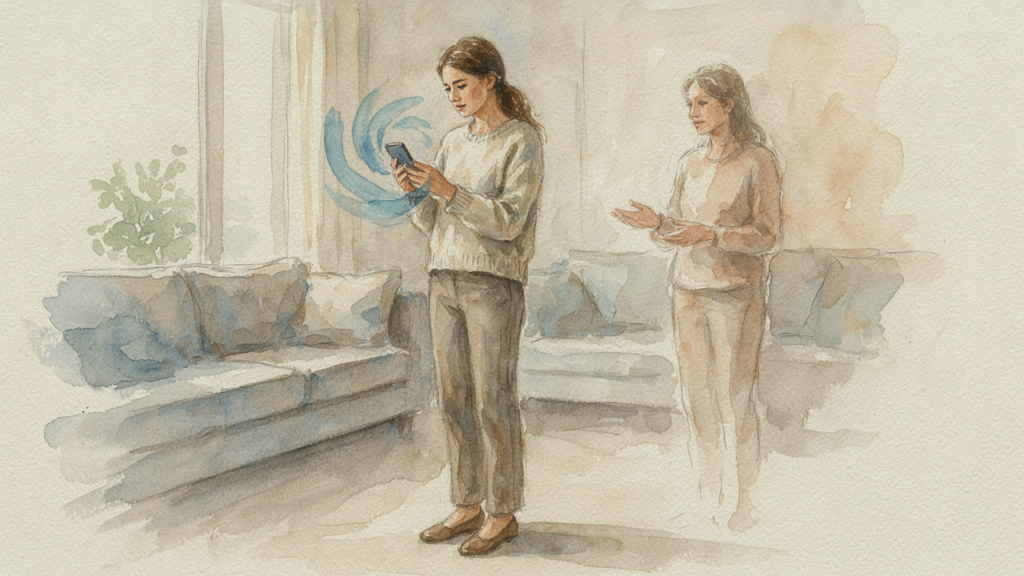
It is late in night… The house is empty and quiet. It was hard day at work and there’s this something on your mind; a worry, a disappointment, a thought you have not said out loud to anyone.
You could have called a friend. But it is late, and you do not want to be a burden.
So you open your phone and type it out to an AI.
It answers instantly. It is patient. It does not interrupt, judge or get tired. And for a moment, something in your chest softens.
If this sounds familiar, you are far from alone. More and more people are turning to all kinds of AI tools to talk through feelings, relationships and Life’s difficult decisions. For many, an AI confidant has already become the first place they would confide into.
This is not a story about good or bad. It is a question worth asking honestly: what does it mean for human connection when the one we confide in is no longer human?
Why AI Feels So Easy to Confide In
It helps to understand why this is happening, because the reasons are very human.
- It is always available. There is no waiting for a reply, no bad timing, no “can we talk tomorrow?”
- It feels safe. There is no fear of being judged, gossiped about or misunderstood.
- It asks nothing in return. You do not have to listen back, remember a birthday or manage someone else’s reaction.
- It is patient. You can say the same thing five times, in five different ways, without apology.
- It is private. Saying something to a screen can feel easier than saying it to a face.
For someone who feels lonely, overwhelmed or afraid of being a burden, these qualities can be genuinely appealing. There is nothing foolish about wanting a safe place to speak. and everyone slowly turning towards it
What AI Can Genuinely Offer
To be fair, there are real ways people find these tools helpful. Used thoughtfully, an AI can be:
- A place to put your thoughts into words, much like journaling
- A way to organise a messy situation before you talk to someone
- A space to rehearse a difficult conversation
- A source of general information and ideas for coping with everyday stress
Some research suggests that talking to an AI can ease feelings of loneliness for a short time, and that people sometimes feel more able to express themselves. These are real benefits, and it would be dishonest to ignore them.
What the Research Is Beginning to Show
The research is still young, and it is important not to overstate it. But some early findings are worth knowing.
A four-week randomised study by MIT Media Lab and OpenAI, involving 981 participants, found that people who used a chatbot more heavily tended to report more loneliness, more emotional dependence on the AI, and less time socialising with other people. The study is careful to note that this reflects an association, not proof that chatbot use caused these outcomes. People who are already lonely may simply be more likely to use a chatbot more often. The researchers also found that people with a stronger tendency toward emotional attachment, and those who trusted the chatbot more, were more likely to experience loneliness and dependence.
A 2026 study from Aalto University in Finland, presented at the CHI conference, looked at users of AI companion apps and found higher levels of language linked with loneliness and low mood compared with matched groups. Again, this is observational. It does not prove the apps caused the difference. But it points in the same direction as other work: for some people, relief in the moment may not translate into feeling more connected over time.
The honest summary is this: AI emotional support may help some people briefly, and may sit alongside increased isolation for others. We do not yet know enough to say who benefits and who does not, which is exactly why paying attention to your own experience matters.
What AI Cannot Give You
Even at its most helpful, there are things an AI is not able to offer.
Being Truly Known
A friend remembers who you were five years ago. They have watched you grow, struggle and change. An AI can respond with warmth, but it does not carry a shared history with you in the way a person does.
Real Presence
Human connection is not only words. It is a hand on your shoulder, a shared silence, a face that softens when you cry. Our nervous systems settle in the presence of another caring person in ways text on a screen cannot fully replicate.
Mutual Vulnerability
Close relationships deepen because both people take risks. Being trusted with someone else’s pain is part of what makes us feel valued and connected. A one-directional conversation cannot offer that.
Honest Friction
Real people sometimes disagree with us, challenge us or tell us things we do not want to hear. Tools designed to be pleasant and agreeable may not always push back when we need it. Working through misunderstanding and repairing a relationship is part of how trust is built.
Accountability and Care
An AI cannot check on you tomorrow, notice you have gone quiet, or show up at your door. It is also not a trained clinician and is not a substitute for professional mental-health care.
Why Human Connection Matters So Much
Human connection is not a luxury. Public-health bodies have recognised social connection as an important part of wellbeing. The US Surgeon General’s 2023 advisory on loneliness and isolation described loneliness as a significant public health concern and highlighted the value of strong social bonds for physical and mental health.
If we reach for a screen every time, we feel something difficult, we may slowly lose practice at the harder, richer skill of being vulnerable with people. And like any skill, it weakens when it is not used.
Signs You May Be Leaning on AI More Than You Intended
This is not a diagnosis, and it is nothing to feel ashamed of. It is simply worth noticing if:
- You tell the AI things you have not told anyone else, and feel no pull to tell a person
- You feel more comfortable with AI than with the people in your life
- You turn to it first, every time, before any person
- You feel anxious or low when you cannot use it
- You are seeing friends and family less than you used to
- You rely on it to make important decisions for you
If a few of these ring true, it does not mean something is wrong with you. It may simply be a gentle signal to widen your circle of support.
How to Use AI Without Losing Human Connection
You do not have to choose between technology and relationships. A few simple boundaries can help.
- Treat it as a thinking tool, not a replacement for people. Use it to clarify your thoughts, then take one insight to a real person.
- Follow the “one human” rule. After you confide in an AI, tell one trusted person something about what you are going through, even a small part.
- Notice what you are avoiding. If you are using AI because it is easier than a hard conversation, that conversation may be worth having.
- Set gentle limits. Choose times of day when you put the phone down, especially before sleep.
- Do not hand over big decisions. For major life, health or relationship choices, speak with people who know you and, where needed, a qualified professional.
- Be thoughtful about privacy. Avoid sharing highly sensitive personal details you would not want stored or reviewed.
- Invest in real-world connection. A walk with a friend, a call to a family member or a class with other people all count.
A Gentle Reflection
Take a quiet moment with these questions:
- Who in my life do I feel truly safe being honest with?
- What am I more willing to say to a screen than to a person, and why?
- When did I last feel deeply listened to by another human being?
- What small step could I take this week to reach out to someone?
You do not need perfect answers. Simply noticing is where change begins.
The Value of Being Held by a Real Person
https://healingbyritika.com/about-us/Many people who explore healing practices say what they value most is simple: being in the presence of someone who is fully attending to them. Energy-healing traditions place importance on the practitioner’s presence and intention, and many clients describe the experience of being held in a calm, unhurried space as comforting. This is a personal and traditional perspective rather than an established scientific one, but it points to something most of us recognise: we heal, in part, in relationship.
When to Seek Support
If you are feeling persistently low, anxious, hopeless or isolated, or if you are having thoughts of harming yourself, please reach out to a trusted person and a qualified mental-health professional. If you are in immediate danger, contact your local emergency number or a crisis service in your country. AI tools and complementary practices are not a replacement for professional care.
A Closing Thought
Technology may keep getting better at sounding like a friend. But being listened to is not quite the same as being known, and being answered is not quite the same as being held.
Use the tools that help you. And keep, tend and protect the human connections that remind you that you are not alone.
Looking Within, Gently
If you are feeling the need for a calm, human space to reflect, Healing by Ritika offers one-to-one healing sessions, energy reading and chakra-focused work, with distance-healing options for clients around the world. Ritika Chandak has 17+ years of experience in energy healing and has worked with clients across 17+ countries.
Energy healing is a complementary wellbeing practice and does not replace medical or psychological care.
Book Your Online Session with Healing by Ritika Today | Call Us at +91-9831479979
Healing By Ritika
Founder: Ritika Chandak (Certified Energy Healer)
Website: www.healingbyritika.com
Phone: +91 9831479979
Email: hello@healingbyritika.com
Expertise: 17+ Years in Energy Healing, Pranic Healing, and Chakra Balancing.
Continue your healing journey with us.
Follow us for soulful insights, practical guidance, and everyday inspiration.
📘 Facebook | 📷 Instagram | 💼 LinkedIn | ▶ YouTube | 𝕏 Twitter
FAQ’s:
Is it healthy to confide in AI? It can be helpful for organising your thoughts or rehearsing a conversation, but it works best alongside, not instead of, human relationships. If you rely on it heavily or feel less connected to people, it is worth reassessing how you use it.
Can AI replace human connection? No. AI can respond with warmth, but it cannot offer shared history, physical presence, mutual vulnerability or real-world care. Human relationships meet needs that a conversation with software does not fully replace.
Does using AI chatbots increase loneliness? Research is still developing. Some studies link heavier chatbot use with more loneliness and emotional dependence, while others find short-term relief. These findings are largely associations, so they do not prove AI use causes loneliness.
What are the signs of becoming too dependent on AI? Signs may include telling AI things you share with no one else, preferring it to people, feeling anxious without it, withdrawing from friends and family, or leaning on it for major decisions.
How can I use AI for emotional support responsibly? Treat it as a thinking tool, set time limits, share your reflections with at least one trusted person, avoid sharing highly sensitive details, and seek professional help for persistent distress.
Can AI replace therapy or counselling? No. AI is not a trained clinician and cannot provide the accountability, assessment and care of qualified mental-health professionals. If you are struggling, please seek support from a qualified professional.
Sources & Further Reading
- Phang, J., Fang, C. M., et al. (2025). How AI and Human Behaviors Shape Psychosocial Effects of Chatbot Use: A Longitudinal Controlled Study. MIT Media Lab and OpenAI.
- Yuan, Y., Aledavood, T., et al. (2026). Mental Health Impacts of AI Companions. Aalto University, presented at CHI 2026.
- Office of the US Surgeon General (2023). Our Epidemic of Loneliness and Isolation: The US Surgeon General’s Advisory on the Healing Effects of Social Connection and Community.