
Procrastination and Stress: Is Putting Things Off Creating More Stress Than You Realise?
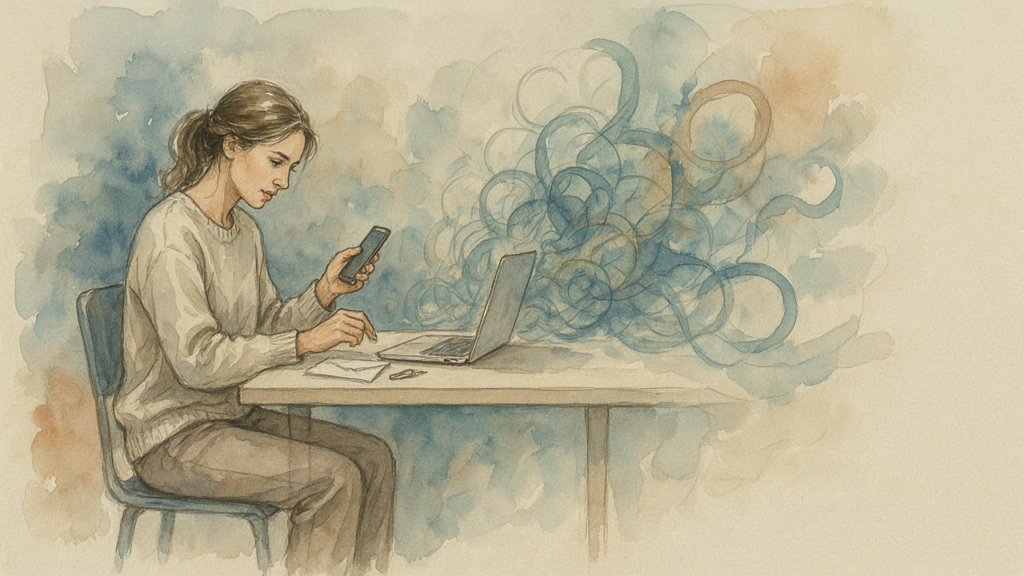
Procrastination and Stress: Is Avoiding Things Off Creating More Stress Than You Realise?
“A stitch in time saves nine.”
We all have heard this proverb since childhood. If there is a small tear in your clothes, fix it while it is small. Ignore it, and the tear can grow bigger, and what could have been a simple repair becomes a much bigger job later part of our Life.
And perhaps this old proverb applies to something beyond a piece of clothing. Perhaps it applies to our stress level too.
How often do we postpone something when it is still small and manageable, only to deal with it later when it has become much bigger?
This is where procrastination enters the picture, and with it, the link between procrastination and stress.
“I procrastinate a lot.”
I hear people say this quite often.
“I know what I need to do, but I keep postponing it.”
“I keep thinking about it, but I don’t actually do it.”
“I’ll do it tomorrow.”
And tomorrow becomes next week. Next week becomes next month.
The interesting thing is that the task itself may not have changed very much. But the mental space it occupies has.
The Gap Between Thinking and Doing
Every intention has two points. There is the moment we think, “I need to do this,” and there is the moment we actually do it.
Between those two moments is a gap. Sometimes the gap is five minutes. Sometimes it is five days. Sometimes it is much, much longer. I believe this gap deserves our attention.
What Are You Postponing Right Now?
Think about something you have been putting off:
- A phone call
- An email
- An appointment
- A difficult conversation
- Starting an exercise routine
- Sorting out your finances
- Beginning something you have wanted to do for a long time
When you first think about it, it may feel perfectly manageable. But if you keep postponing it, you don’t necessarily stop thinking about it. Your mind keeps bringing it back:
I still have to do that.
I haven’t done it yet.
I really should get around to it.
I’ll do it tomorrow.
Now you are carrying not only the task, but also the thought of the task. The gap has grown, and so can the mental pressure around it.
Why Do We Procrastinate?
We often use the word procrastination as though it simply means being lazy. Psychology suggests it is more complicated than that.
Researchers Fuschia Sirois and Timothy Pychyl have described procrastination partly as a form of short-term emotional regulation. We may postpone something because doing it makes us uncomfortable. It could feel boring, difficult, overwhelming, uncertain or emotionally unpleasant.
So when we avoid it, and for a little while, we feel better. That is what makes procrastination so tempting. The discomfort disappears temporarily.
But the task doesn’t. It simply moves into the future. And sometimes, the stress moves with it.
When Procrastination and Stress Feed Each Other
This can become a cycle:
Stress → avoidance → procrastination → unfinished business → more stress.
You feel stressed. You avoid something because you don’t feel like dealing with it. You procrastinate, and the task remains unfinished. You think about it again and feel more pressure. Now you want to avoid it even more.
Many worldwide research points to a meaningful relationship between chronic procrastination and perceived stress. A longitudinal study published in the British Journal of Health Psychology found that chronic procrastination was associated with later health problems, with perceived stress helping to explain part of that relationship. Research in this area is still developing, and not every study has found the same results, but the link between avoidance and stress is a useful one to notice in our own lives.
So perhaps procrastination isn’t merely a productivity issue. For some of us, it can become part of the way stress accumulates in all of our lives.
The Longer the Gap, the Heavier It Can Feel
Imagine you decide on Monday that you are going to start something. On Monday, it feels manageable. By Wednesday, you haven’t started. By Friday, you are thinking about why you haven’t started. By the following Monday, you are stressed not only about the original task, but also about the fact that you have been postponing it.
The task may still be exactly the same. But your experience of it has changed.
This is what I mean by the gap between intention and action. The longer the gap remains open, the more mental energy we may spend thinking about it. Sometimes that is why we feel stressed even when we are not physically doing very much.
The body may be resting. The mind may still be carrying unfinished business.
A Stitch in Time Saves Nine
This brings me back to that simple childhood proverb. Perhaps it is good advice for our mental lives too:
- Fix the small problem while it is still small.
- Have the conversation before resentment becomes anger.
- Make the decision before uncertainty becomes overwhelming.
- Take care of the responsibility before it becomes a crisis.
- Start the habit before changing it feels impossible.
- Take the first step before the distance between intention and action becomes enormous.
It doesn’t mean we have to do everything immediately. It simply means we should become more conscious of what we repeatedly postpone.
Not Every Delay Is Procrastination
Of course, not every delay is procrastination. Sometimes we genuinely need time. Sometimes we need rest. Sometimes circumstances change. Sometimes we realise that something we thought was important isn’t important anymore.
There is nothing wrong with waiting when waiting is a conscious choice.
Procrastination is different. It is when we keep postponing something we have already decided matters to us, and continue carrying the mental weight of not doing it.
So, What Are You Procrastinating About?
The next time you feel stressed, perhaps ask yourself a slightly different question. Instead of only asking, “What is stressing me?” ask:
“What am I procrastinating about?”
Maybe there is a small thing you have been avoiding. A call. A decision. A conversation. A responsibility. A change. A dream.
You don’t have to solve your entire life today. Just close one small gap. Take one small action.
Because sometimes the relief doesn’t come from doing everything. It comes from finally doing the one thing you have been thinking about for far too long.
Perhaps that old proverb had more wisdom in it than we realised.
A stitch in time saves nine.
And sometimes, taking care of something while it is still small doesn’t just save us time. It may save us a great deal of unnecessary stress.
Looking Within, Gently
If procrastination has slowly become a habit in your life, and you feel there is something deeper keeping you from moving forward, perhaps it is worth looking within. Healing can be a gentle support in that journey.
If you feel called to explore it, connect with us at Healing by Ritika. Sometimes, taking the first step is all that is needed to begin closing the gap.
Healing and energy work are complementary wellbeing practices and do not replace medical or psychological care. If procrastination or stress is significantly affecting your daily life, please speak with a qualified health professional.
Book Your Online Session with Healing by Ritika Today | Call Us at +91-9831479979
Healing By Ritika
Founder: Ritika Chandak (Certified Energy Healer)
Website: www.healingbyritika.com
Phone: +91 9831479979
Email: hello@healingbyritika.com
Expertise: 17+ Years in Energy Healing, Pranic Healing, and Chakra Balancing.
Continue your healing journey with us.
Follow us for soulful insights, practical guidance, and everyday inspiration.
📘 Facebook | 📷 Instagram | 💼 LinkedIn | ▶ YouTube | 𝕏 Twitter
FAQ’S:
What is the link between procrastination and stress? Procrastination and stress can feed each other. We often postpone a task to avoid discomfort, but the task remains unfinished and keeps returning to our thoughts, which can add to the pressure and make avoidance more tempting.
Is procrastination the same as laziness? Not necessarily. Psychology describes procrastination partly as a way of managing uncomfortable emotions, such as boredom, overwhelm or uncertainty, in the short term. It is often about avoiding a feeling rather than a lack of effort.
Why do I feel stressed even when I am not doing much? The body may be resting while the mind keeps carrying unfinished tasks. Repeatedly thinking about something you have postponed can create mental pressure, even when you are not physically busy.
Is every delay procrastination? No. Waiting can be a conscious choice, such as taking rest, responding to changed circumstances or realising a task no longer matters. Procrastination is when we keep postponing something we have already decided is important.
How can I start closing the gap between thinking and doing? Choose one small task you have been postponing and take one small action, such as sending the email or making the call. Reducing the gap even slightly can ease the mental pressure around it.
When should I seek professional support? If procrastination or stress is significantly affecting your work, relationships, sleep or daily life, speak with a qualified health or mental-health professional. Complementary practices can support wellbeing but do not replace professional care.
Sources & Further Reading
- Sirois, F. M., & Pychyl, T. A. (2013). Procrastination and the priority of short-term mood regulation. Social and Personality Psychology Compass, 7(2), 115 to 127.
- Sirois, F. M., Stride, C. B., & Pychyl, T. A. (2023). Procrastination and health: A longitudinal test of the roles of stress and health behaviours. British Journal of Health Psychology, 28(3), 860 to 875.