Successful Women and Relationships: Why Hyper-Independence Makes Vulnerability Feel Unsafe
Successful Women and Relationships: Why Vulnerability Feels Harder Than Success
She can negotiate the deal. Manage the team. Pay her own bills. Solve everyone else’s problems before they’ve even finished explaining them. She’s built something real — a career, a life, a version of herself she’s proud of.
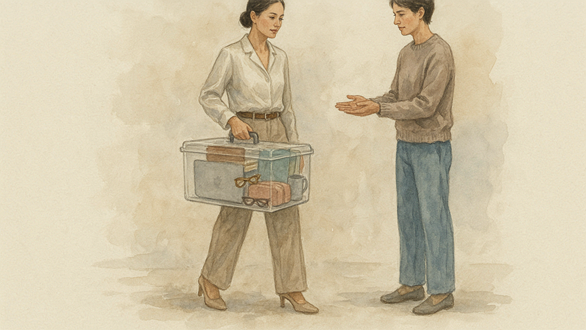
And then someone looks at her and says, “Let me take care of you.”
Something in her tightens. Not because she doesn’t want it. Because she genuinely doesn’t know what to do with it.
This is one of the quieter, less-discussed patterns in successful women and relationships: the contradiction between being fully capable of doing everything alone, and feeling deeply uncomfortable letting someone else show up for you. It’s not about being unlovable, difficult, or “too much.” It’s often about hyper-independence — a way of relating to the world that can protect you brilliantly in one arena and quietly get in the way in another.
Success Doesn’t Make You Bad at Love
Let’s clear something up first, because the stereotype needs challenging directly: career success and relationship difficulty are not automatically connected. There’s no evidence that ambition, competence or professional achievement makes a woman harder to love.
What’s true is this: independence, on its own, is healthy. It becomes something else entirely when it turns into the only way someone feels safe — when self-reliance stops being a strength you draw on and becomes a wall you live behind. Emotional intimacy, by its nature, requires both giving and receiving. Most successful women have the giving part mastered. It’s the receiving that can feel unfamiliar, even threatening.
None of this is a flaw. It’s a pattern — and patterns can shift.
What Is Hyper-Independence?
Hyper-independence describes a tendency to avoid relying on others — even when support is genuinely available and would make life easier. It often develops as a protective strategy rather than simply being a fixed personality trait, and it can look a lot like strength from the outside while feeling quite different on the inside.
| Healthy Independence | Hyper-Independence | |
| Asking for help | Comfortable when needed | Feels like failure or weakness |
| Trust | Extended gradually, with discernment | Withheld even from trustworthy people |
| Delegation | Shares tasks and responsibility | Insists on doing everything personally |
| Vulnerability | Shared selectively and consciously | Avoided almost entirely |
| Receiving support | Accepted with ease | Triggers discomfort or guilt |
| Emotional boundaries | Flexible, communicated clearly | Rigid, used as self-protection |
| Relationships | Interdependent | One-directional (giving, rarely receiving) |
Recognising yourself in the right-hand column doesn’t mean something is wrong with you. It often means a strategy that once kept you safe is still running, long after it was needed.
Why Can Receiving Love Feel Harder Than Giving It?
For many capable women, giving comes naturally — helping, providing, solving, advising, carrying responsibility. It feels productive, even comfortable.
Receiving is a different skill entirely. It can mean:
- Accepting help without immediately reciprocating
- Letting yourself be cared for, without earning it first
- Expressing an actual need out loud
- Depending on someone else, even briefly
- Saying “I need you” without qualifying it
- Letting someone see you uncertain, rather than composed
Giving keeps you in control. Receiving asks you to trust — trust that the other person will follow through, trust that needing something doesn’t make you weak, trust that you won’t be let down. That’s a genuinely bigger ask for someone whose safety has, for a long time, depended on not needing anyone.
When Self-Protection Becomes Emotional Armour
Hyper-independent patterns don’t appear from nowhere. For some people, they may be shaped by things like:
- Past disappointment, where trust didn’t pay off
- Repeated relationship hurt
- Childhood experiences where relying on someone wasn’t safe or consistent
- Fear of rejection or abandonment
- Simply having learned, early and thoroughly, to rely on yourself
- Previous relationships where vulnerability was met with dismissal rather than care
- Cultural or social expectations around being a “strong woman” who doesn’t need rescuing
This isn’t a diagnosis, and it doesn’t apply uniformly to every independent woman — it’s a set of possible threads worth noticing, not a checklist that defines you. For some people, one or two of these resonate strongly; for others, none of them do, and the pattern developed differently. The point isn’t to trace a perfect cause. It’s to recognise that self-protection, once useful, can outlast its purpose.
7 Signs You May Be Hyper-Independent in Relationships
- You rarely ask for help, even when you clearly could use it.
- You feel uncomfortable, even a little exposed, when someone does something for you.
- You’d rather struggle alone than risk being let down.
- You withdraw slightly when someone starts getting emotionally close.
- You find it far easier to give love than to receive it.
- You interpret needing someone as a kind of weakness.
- You feel uneasy whenever you can’t control the outcome of a situation.
A reminder worth sitting with: these behaviours don’t automatically mean you’re hyper-independent, and they’re not a verdict on your character. They’re simply patterns worth reflecting on.
The Success Paradox: Control at Work, Vulnerability at Home
Professional environments tend to reward a very specific set of traits — control, competence, decisiveness, self-reliance, sharp problem-solving. Those are the exact qualities that build a career.
Intimate relationships ask for something almost opposite — trust, flexibility, emotional honesty, mutual dependence, genuine listening, and the willingness to receive rather than only provide.
The armour that helps you lead a boardroom may not be the same armour you need in a relationship. That’s not a personal failing. It’s simply that two very different environments reward two very different skill sets — and most of us were only ever taught to build one of them well.
When “I Don’t Need Anyone” Becomes “I Don’t Let Anyone In”
There’s a subtle but important difference here. A woman can be entirely capable of living independently — financially, logistically, emotionally — while still choosing to let someone else contribute meaningfully to her life. Capability and connection aren’t in competition.
This is where interdependence comes in: two people who could manage alone, choosing instead to rely on each other, at least some of the time. It involves emotional reciprocity, healthy (not fearful) dependence, clear boundaries, and trust built gradually.
Healthy relationships were never about losing your independence. They’re about choosing connection without abandoning yourself in the process.
How to Become More Comfortable Receiving Love
This is where things become practical. A few realistic starting points:
- Start small. Let someone make you a coffee, carry something, or help with a task — without immediately returning the favour.
- Practise saying “thank you” instead of the instinct to even the score right away.
- Notice the discomfort when someone helps you, without acting on it or shutting it down.
- Express one need clearly, even if it feels unfamiliar or slightly exposing.
- Let someone else solve a problem occasionally — even one you’re fully capable of solving yourself.
- Say the fear out loud instead of withdrawing quietly when things get close.
- Practise vulnerability gradually, in small, low-stakes moments, rather than waiting for a “big” one.
- Learn to tell dependence apart from healthy interdependence — one erodes you, the other supports you.
None of this requires becoming less capable. It simply asks you to let capability share space with connection.
Can Emotional Healing Help With These Patterns?
Emotional healing practices may help some people explore the patterns underneath hyper-independence — self-protection, past experiences, relationship triggers, self-worth, and difficulty receiving. This kind of reflective work can sit alongside more structured approaches, including complementary practices such as energy healing, chakra balancing and Pranic Healing.
It’s important to be clear about the distinction: these are complementary, spiritually-informed practices, not a substitute for evidence-based psychotherapy. They are not presented here as a cure for attachment patterns, trauma, or relationship difficulties — simply as one additional space some people find useful for reflection and emotional processing.
The Energy-Healing Perspective on Relationship Patterns
Within energy-healing traditions, practitioners sometimes describe emotional and relationship patterns through concepts such as emotional energy, the heart chakra (connection and openness), the solar plexus (personal power and self-worth), energetic attachments, the aura, and personal energetic boundaries.
These are spiritual and energy-healing frameworks, not scientifically established medical mechanisms, and it wouldn’t be accurate to say a “blocked chakra” causes relationship problems. For some people, this lens simply offers another language for reflecting on the same emotional patterns that psychology also describes — worth exploring if it resonates, entirely optional if it doesn’t.
How Healing By Ritika Supports Emotional & Relationship Healing
Ritika Chandak is a Pranic Energy Healing Practitioner with 17+ years of experience, supporting clients across 17+ countries, including Australia. Her work spans Emotional & Mental Healing, Relationship Healing, Energy Healing, Chakra Balancing and Aura work, delivered through structured distance sessions.
This work is positioned around self-awareness, emotional wellbeing and personal growth — not around finding a partner, getting an ex back, making someone fall in love, fixing a relationship, or guaranteeing emotional healing. No practitioner can honestly promise any of that. What sessions can reasonably offer is space to reflect, process, and gently shift the patterns that make receiving love feel harder than it needs to. Clients across Australia can access these sessions entirely online.
When to Consider Professional Support
Complementary emotional and energy work has real value for everyday self-reflection, but it has limits. It’s worth speaking with a qualified mental-health professional if relationship difficulties involve significant anxiety, depression, trauma, abuse, persistent distress, difficulty functioning day to day, or other severe emotional symptoms.
Energy healing and emotional healing practices are complementary — they’re not a replacement for professional psychological or medical care, particularly where trauma or abuse is involved.
Can You Receive Without Feeling Guilty? A Short Reflection
Sit with these questions honestly, without trying to answer them perfectly:
- When someone helps me, what do I immediately feel?
- Do I feel I owe people something when they care for me?
- What happens inside me when I can’t control the situation?
- Is asking for support difficult for me — and if so, what makes it hard?
- What would healthy interdependence actually look like in my life?
This isn’t a diagnostic quiz. It’s simply a starting point for noticing your own patterns a little more clearly.
Conclusion
Being strong doesn’t mean you have to do everything alone. And allowing someone to love, support and care for you doesn’t make you any less independent — it makes you human.
If this pattern feels familiar, Healing By Ritika offers distance sessions in emotional healing, relationship healing, energy healing and chakra balancing for clients across Australia, focused on self-awareness and personal wellbeing. These sessions are complementary and are not a substitute for professional psychological or medical care, and they cannot promise to find you love or fix a relationship — only to support the work that’s genuinely yours to do.
Book Your Online Session with Healing by Ritika Today | Call Us at +91-9831479979
Healing By Ritika
Founder: Ritika Chandak (Certified Energy Healer)
Website: www.healingbyritika.com
Phone: +91 9831479979
Email: hello@healingbyritika.com
Expertise: 17+ Years in Energy Healing, Pranic Healing, and Chakra Balancing.
Continue your healing journey with us.
Follow us for soulful insights, practical guidance, and everyday inspiration.
📘 Facebook | 📷 Instagram | 💼 LinkedIn | ▶ YouTube | 𝕏 Twitter
FAQ‘ S:
Why do successful women struggle with relationships? Career success itself doesn’t cause relationship difficulty. Some successful women develop hyper-independent patterns as a form of self-protection, which can make emotional vulnerability and receiving support feel unfamiliar, even when the relationship itself is healthy.
What is hyper-independence? Hyper-independence is a tendency to avoid relying on others, even when support is available and would genuinely help. It often functions as a protective strategy rather than simply being a personality trait.
Is hyper-independence bad? Not inherently — independence is a strength. It becomes limiting when it’s the only way someone feels safe, making it difficult to receive care, trust others, or build genuine emotional closeness.
Why is it difficult for some women to receive love? Receiving requires trust and vulnerability, which can feel riskier than giving, especially for women who’ve learned that relying on themselves is safer than relying on someone else. It’s a learned pattern, not a personal flaw.
What causes hyper-independence? It can develop from past disappointment, childhood experiences, repeated relationship hurt, or cultural expectations around being self-sufficient. It varies significantly between individuals, and no single cause applies to everyone.
How does hyper-independence affect relationships? It can create one-directional dynamics where a person gives consistently but struggles to receive, leading to emotional distance, withdrawal when things get close, or difficulty expressing needs.
What is the difference between independence and hyper-independence? Healthy independence includes the ability to ask for help and trust others when needed. Hyper-independence avoids relying on others almost entirely, even when support would genuinely help.
How can I become more vulnerable in a relationship? Start with small, low-stakes moments — accepting help, expressing a need clearly, or naming a fear instead of withdrawing. Vulnerability tends to build gradually, not all at once.
Can successful women have difficulty trusting partners? Yes, for some — though this isn’t universal or tied to success itself. Difficulty trusting a partner is more closely linked to past experiences and learned self-protection patterns than to career achievement.
What is emotional interdependence? Interdependence describes two people who are each capable of managing independently, but choose to rely on and support one another. It’s the balance between self-sufficiency and genuine connection.
Can emotional healing help relationship patterns? Emotional healing practices may support self-awareness around relationship patterns, self-protection and difficulty receiving. They complement, rather than replace, professional psychological support where needed.
Can energy healing be done online in Australia? Yes. Distance energy healing sessions are commonly offered to clients across Australia, allowing sessions to be received remotely without needing a local practitioner.