
Understanding the Four Layers of the Human Energy Field
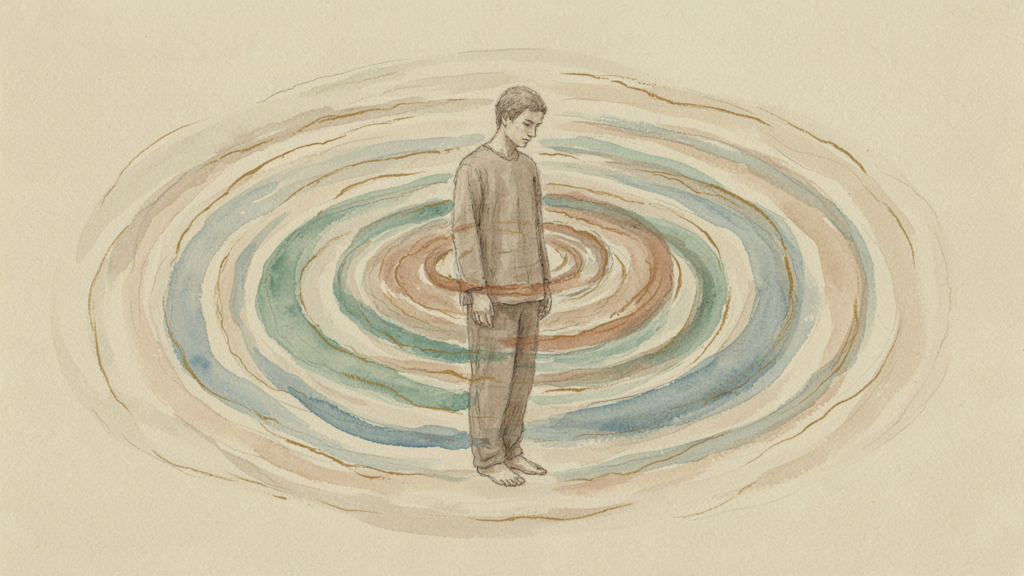
Understanding the Four Layers of the Human Energy Field
When we talk about vibration, the first thing to understand that human beings exist within a particular range of perception.
We are Homo sapiens, and our senses allow us to perceive only a certain range of what exists around us. We can see certain wavelengths of light, hear within a certain range of sound, and sense some things while remaining completely unaware of many others.
Other forms of life have different sensory capacities. Some animals can perceive things that are outside the range of human perception, and their relationship with light, sound, movement and vibration can be very different from ours.
So when I talk about the human energy field, I am not suggesting that there are only four layers of energy. There may be many more layers beyond what we, as human beings, can broadly sense or understand. Different traditions and practitioners may also work with different kinds of scanning and may describe more layers.
This article is a practitioner’s perspective, drawn from traditional energy-healing frameworks. The aura and its layers are not established physical structures in medical science.
What Are the Four Layers of the Human Energy Field?
When I work with the human energy field, I broadly work with four layers of energy:
- The physical aura
- The emotional aura
- The mental aura
- The spiritual aura
This is a simplified way of understanding the energy field, from the level at which we can broadly experience and work with it.
More importantly, these four layers are not separate compartments. They are like neighbours. They constantly communicate with one another, and what happens in one layer can influence the layer next to it.
That is where the real understanding begins.
The Four Auras, One Layer at a Time
1. The Physical Aura
The first layer is the physical aura. It is the layer closest to the physical body.
When we take care of our body through good food, adequate sleep, exercise, movement, rest and other healthy habits, we are also supporting the strength and wellbeing of this layer.
The physical and emotional auras are neighbours, and they are quite cordial with each other. Whatever happens in the physical layer can influence the emotional layer, and whatever the emotional layer generates can also influence the physical layer.
We can understand this through very ordinary experiences.
Suppose you have a headache. When the body is experiencing that discomfort, the emotional field can become irritated. Even a small amount of physical discomfort can make it difficult to remain completely peaceful.
Now look at the opposite situation. Suppose you are genuinely happy. Your emotional state changes, and the body expresses that happiness. You look happy, you feel comfortable, your expressions soften and you smile.
The communication also happens in the other direction. When the emotional aura generates sadness, the body may respond with tears. When the emotional aura experiences fear, the body can respond too, with changes in breathing, digestion, muscles, sleep or other bodily sensations. The list is endless.
This is why I see the physical and emotional auras as neighbouring layers rather than two completely separate things.
2. The Emotional Aura
The second layer is the emotional aura. This is the layer through which we experience and express emotions such as happiness, sadness, fear, anger, excitement, affection, irritation, peace and many other emotional states.
Its relationship with the physical aura is continuous. A physical experience can affect how we feel emotionally, and an emotional experience can influence how the body feels and behaves.
But the emotional aura does not exist only in relationship with the physical aura. It also has a very close relationship with the mental aura. The mental and emotional auras are neighbours too, and what the mind thinks can influence what the emotions feel.
We can observe this in everyday life. Imagine that you have sent a message to a friend. Three hours have passed, and they haven’t replied. Your mental aura may immediately begin creating possibilities:
“Maybe they are upset with me.”
“Maybe I said something wrong.”
“What if they don’t want to talk to me?”
Nothing has actually happened yet. Your friend may simply be busy. But the mind has created a possibility, and the emotional aura can respond to it. You may begin to feel anxious, insecure, worried or fearful.
So the sequence can become: mental thought → emotional reaction → physical response.
The thought itself may not be a fact, but the emotional response can still be very real. This is one of the ways the mental and emotional layers interact.
3. The Mental Aura
The third layer is the mental aura. It is connected with our thoughts, analysis, interpretation, judgement, logic and the stories we create around situations.
The mind is constantly processing information. Sometimes it is dealing with something that has actually happened. Sometimes it is dealing with something that might happen. And sometimes it is simply creating an entire conversation in our head.
For example, you may be thinking about speaking to someone, and your mind starts creating a chain:
“If I say this, the person will say this.”
“If the person says this, then I will say that.”
“And if they respond in that way, then I will have to answer in another way.”
The conversation hasn’t even happened, but mentally you have already lived through several versions of it.
Depending on what the mind is creating, the emotional aura can respond accordingly. If the mental aura creates a fearful possibility, the emotional aura may generate fear. If it creates a threatening possibility, the emotional aura may generate anxiety or defensiveness. If it creates something joyful, the emotional aura may generate happiness and excitement.
This is why I see the mental and emotional auras as closely connected. The mental aura creates, analyses, interprets and processes. The emotional aura responds to what the mind is presenting to it. And then the emotional experience can travel further into the physical layer.
So we can have mental → emotional → physical. But the flow is not one-way. A physical experience can influence our emotions, our emotions can influence our thoughts, our thoughts can create new emotions, and those emotions can once again influence the physical body. It is a continuous interaction.
4. The Spiritual Aura
The fourth layer is the spiritual aura. For me, it is connected with virtues, principles, values and the way we understand life at a deeper level. It is connected with qualities such as kindness, compassion, gratitude, non-harming and the intention with which we live our lives.
When we develop good thoughts and kindness towards others, when we consciously follow non-harming principles, and when we begin to understand the universe and our place within it on a deeper level, this spiritual layer can expand. I see this aura differently from the other layers because it does not have to remain limited in the same way. It can expand as our spiritual understanding expands.
Once again, this aura has a neighbouring relationship, this time with the mental aura. Whatever our principles, values and virtues are, they influence the way our mind thinks.
If compassion is genuinely important to us, our mind will begin to interpret situations through that value. If non-harming is one of our principles, our thoughts and decisions will naturally be influenced by it. If kindness is something we consciously cultivate, our mental responses can begin to move in that direction as well.
So the spiritual aura influences the mental aura, just as the mental aura influences the emotional aura, and the emotional aura interacts with the physical aura. This gives us a simple way of looking at the entire system:
Spiritual → Mental → Emotional → Physical
But the relationship is not a straight line. The influence can move in both directions between neighbouring layers. Our physical experiences can influence our emotions, our emotions can influence our thoughts, our thoughts can influence our emotions, and our values can influence our thoughts. Our thoughts, emotions and physical experiences can all influence one another.
That is why I don’t see these four auras as isolated layers. They are interconnected, constantly communicating, like four neighbours who are always exchanging information.
Bringing the Four Layers of the Human Energy Field Together
So when I work with the human energy field, I broadly understand it through these four layers:
- Physical aura: connected with the physical body and our physical experiences.
- Emotional aura: connected with our feelings and emotional responses.
- Mental aura: connected with our thoughts, analysis, interpretation and mental patterns.
- Spiritual aura: connected with our values, virtues, principles, kindness, non-harming and deeper understanding.
The important point is that none of these layers exists in complete isolation. A thought can create an emotion. An emotion can influence the body. A physical experience can influence an emotion. An emotion can influence the mind. A deeply held value can influence the way the mind interprets a situation. And the process continues.
There may be many more subtle layers than the four we can describe here. Human perception has its limitations, and different people and traditions may understand the energy field differently.
But keeping it simple can help us understand something very important: we are not made up of separate pieces. The physical, emotional, mental and spiritual aspects of our experience are continuously communicating with one another.
And sometimes, to understand what is happening in one layer, we need to look at what is happening in the layer next to it.
Explore Energy Healing With Healing by Ritika
Ritika Chandak is an energy healing practitioner with 17+ years of experience, working with clients across 17+ countries through one-to-one sessions, energy reading and chakra-focused work, including distance-healing options. Energy healing is a complementary wellbeing practice and does not replace medical or psychological care.
Book Your Online Session with Healing By Ritika Today | Call Us at +91-9831479979
Healing By Ritika
Founder: Ritika Chandak (Certified Energy Healer)
Website: www.healingbyritika.com
Phone: +91 9831479979
Email: hello@healingbyritika.com
Expertise: 17+ Years in Energy Healing, Pranic Healing, and Chakra Balancing.
Continue your healing journey with us.
Follow us for soulful insights, practical guidance, and everyday inspiration.
📘 Facebook | 📷 Instagram | 💼 LinkedIn | ▶ YouTube | 𝕏 Twitter
FAQ
What is the human energy field? In energy-healing traditions, the human energy field, also called the aura, is described as a subtle field of energy surrounding and interacting with the body. It is a traditional and practitioner-based concept, not an established structure in medical science.
What are the four layers of the aura? In this practitioner’s framework, the four broad layers are the physical, emotional, mental and spiritual auras. Other traditions and practitioners may describe fewer or more layers.
What is the physical aura? The physical aura is the layer closest to the body. It is associated with physical experiences and habits such as food, sleep, movement and rest.
How are the emotional and mental auras connected? They are described as neighbouring layers. Thoughts can influence emotions, and emotions can in turn shape thoughts, which is why a worrying thought can quickly create an anxious feeling.
What is the spiritual aura? The spiritual aura is associated with values, virtues and principles such as kindness, compassion, gratitude and non-harming, and with how a person understands life at a deeper level.
Can energy healing replace medical or psychological care? No. Energy healing is a complementary wellbeing practice. It should not replace medical diagnosis, treatment or professional mental-health care.